
AWM Digital Assistant
Blood Donor Support • Online

Get instant access to blood donor requests, receive emergency alerts nearby, and manage profiles right from your home screen.
 Abdul Waheed (Late)
In Memory Of My Beloved Father Who Always Wanted To Help Others In Time Of Need & Inspired Me To Do The Same. May Allah Have Mercy On His Soul & May He Always Rest In Peace. Do Pray for My Father, Me & The Blood Donor Team for this Humble Effort.-- Regards, Usman Waheed Chaudry
Most blood donations are separated into components such as red blood cells, platelets, clotting factors, plasma, antibodies, and white blood cells. This allows doctors to provide only the required component, improving treatment effectiveness and reducing risks.
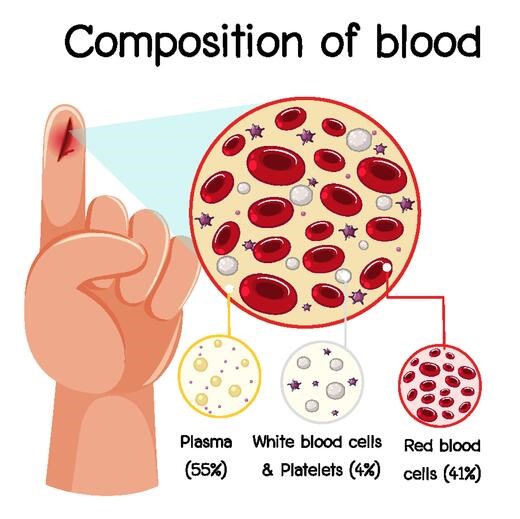
Red blood cells restore oxygen-carrying capacity in patients with bleeding or anemia. They can be refrigerated for 42 days and frozen in special cases for up to 10 years.
Platelets help blood clot and are used for patients with low platelet counts. They can only be stored for 5 to 7 days.
Platelets must be transfused quickly as they are difficult to store. They can be separated:
Manual separation is low-cost but less effective, while machine separation is more efficient but expensive. Facilities such as Fatmid Foundation and major hospitals provide these services.
These proteins help stop bleeding and are used in disorders like hemophilia. They may come from plasma or be produced artificially.
Plasma contains vital proteins and is used when multiple clotting factors are missing. It can be frozen and stored for up to one year.
Antibodies provide temporary immunity and help fight infections such as rabies, hepatitis, and tetanus.
Used in rare serious infections when immune systems are severely weakened. Their use has decreased due to modern treatments.
Synthetic blood substitutes are being developed to transport oxygen. They are useful in emergencies but are not yet widely available.
Doctors can select specific blood components during transfusion so patients receive exactly what their condition requires.
Reference: Last reviewed July 2007 by Harold S. Kaplan, MD; Donna L. Skerrett, MD